How Deep Do You Bury an Electrical Line to a Shop or Barn in Colorado?
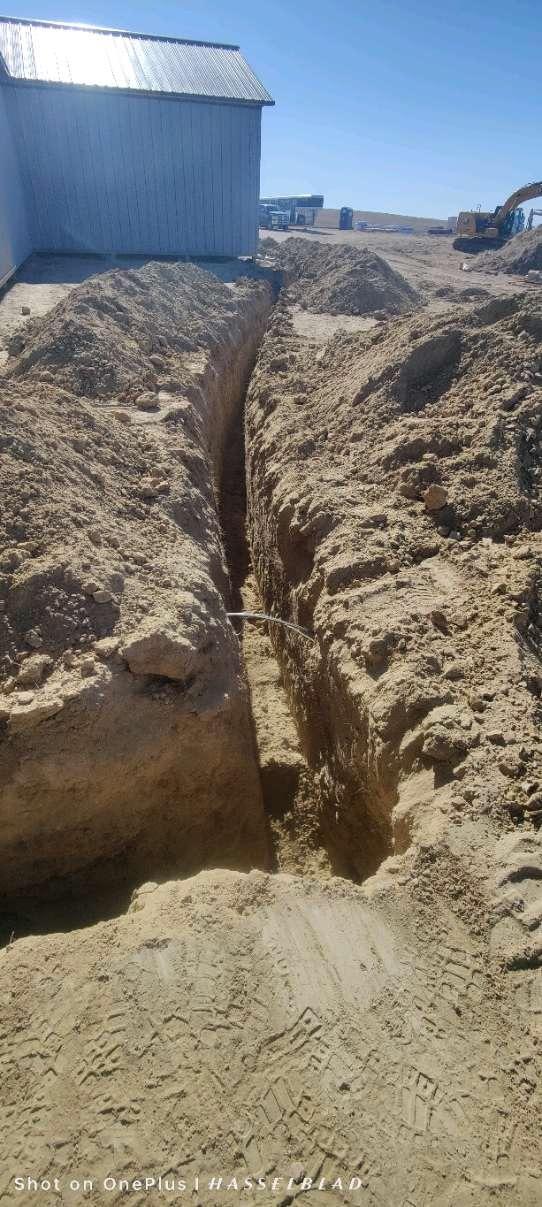
Running power to a new shop, detached garage or barn means digging a trench, and the first question is always how deep. The answer depends less on Colorado than on how the wire is run: in conduit, as direct-burial cable, or as a small GFCI-protected circuit.
This is a general guide, not electrical advice. Your electrician designs the circuit and your local building department has the final say. Some towns amend the code, and an inspector can require more depth than the minimums below.
The short answer
Colorado follows the National Electrical Code (NEC). The NEC's minimum cover table (Table 300.5) sets how much soil has to sit on top of an underground line. "Cover" is measured from the top of the conduit or cable to finished grade, not from the bottom of the trench.
For a typical residential yard with no vehicle traffic, the common minimums are:
| How the wire is run | Minimum cover (typical yard) |
|---|---|
| Direct-burial cable (such as UF) | 24 inches |
| PVC conduit | 18 inches |
| Rigid metal conduit | 6 inches |
| Residential 120-volt, 20-amp GFCI-protected circuit | 12 inches |
Under a residential driveway, PVC conduit and direct-burial cable both need at least 18 inches. Under streets, alleys and commercial parking areas, the minimum goes up to 24 inches for every method.
What about a 200-amp feed to a shop?
A big feed to a shop is usually run in conduit, so the 18-inch PVC minimum is the starting point. In practice the trench is often dug deeper than the minimum, for a few reasons:
- Room to work. Wide conduit, sweeps at each end and a sand bedding layer all take depth.
- Sharing the trench. If a water line is going in at the same time, the trench has to be deep enough for the water line, which needs to be below the frost line. Electrical and water lines can share a trench only when the spacing and code requirements are met, so check with your electrician and plumber first.
- Future grading. If the yard will be regraded later, a line that's just at the minimum today can end up too shallow.
Your electrician will tell you the wire size, conduit size and exact depth. The digging, bedding and backfill are where an excavation crew comes in.
Before anyone digs
Colorado law requires a locate request through Colorado 811 at least two full business days before digging, not counting the day you submit it. You can call 811 or submit online at colorado811.org.
One thing that catches a lot of shop owners: 811 only marks public utility lines. Private lines on your property, such as power already running to another outbuilding, a line to a well pump or an old sprinkler main, won't be marked. Those have to be located separately before a trench goes in.
What drives trenching cost
These are the things that change the price of a trench:
- Length of the run. The biggest factor. A short run from the house to a garage is a very different job from a long run across an acreage.
- Depth and width. A deeper trench for a shared water line, or a wider one for multiple conduits, means more digging and more backfill.
- What's in the way. Driveways, sidewalks, trees, fences, rock and existing lines all slow things down.
- Restoration. Backfilling and compacting so the trench doesn't settle is part of the job. Replacing sod or concrete on top is extra.
- Combining jobs. If your shop also needs a pad, a slab or final grade, doing the trenching in the same visit usually saves a mobilization.
Need a trench dug?
BK Builders digs utility trenches for power, water and sewer lines to shops, garages, barns and additions across Broomfield and the north Denver metro. We work around your electrician or plumber's schedule, then backfill and compact so the ground doesn't sink later.
Call (720) 303-5621 to plan your line, or learn more about utility trenching.
